
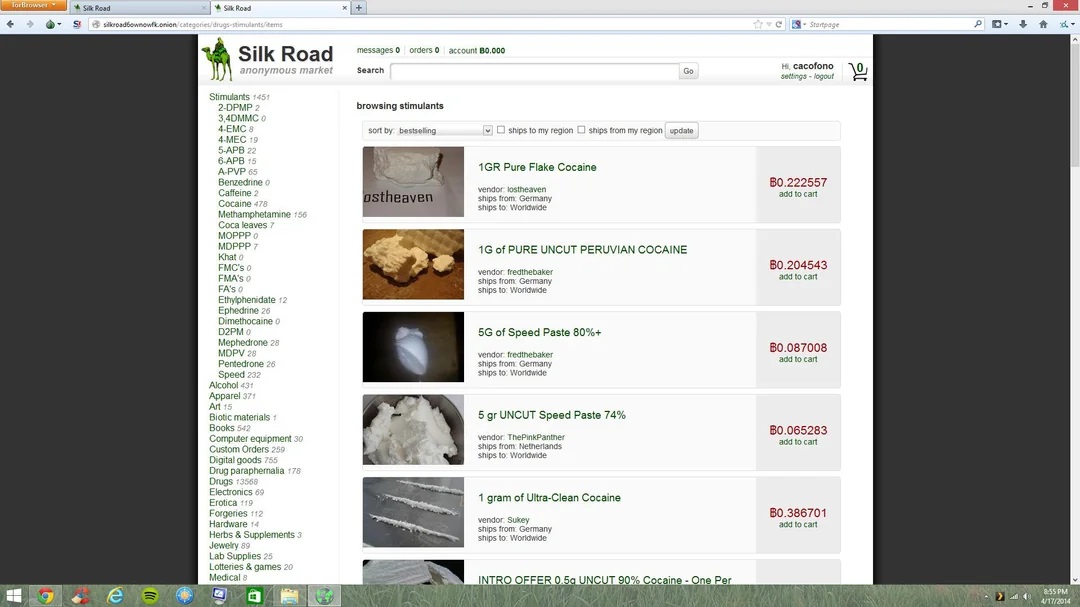
From Silk Road to 50+ Markets: Has the Darknet Lost Its Original Vision?
Jun 16, 2026
Back when Silk Road appeared in 2011, it wasn't just another marketplace.
Whether people agreed with it or not, there was a philosophy behind it. Ross Ulbricht spoke about personal freedom, voluntary exchange, privacy, and reducing violence associated with traditional street-level drug markets. Many early users weren't attracted only by products—they were attracted by the idea.
Fast forward to 2026 and the darknet looks very different.
Today, it feels like a new market launches every week.
Some disappear within days. Others survive a few months. A handful last longer. Yet almost all of them seem to arrive with the same promise: lower fees, better security, more features, faster support, bigger rewards.
The question is whether the darknet has become a victim of its own success.
At the moment there are dozens of active marketplaces competing for the same users, vendors, and reputation. The number of buyers has not grown at the same rate as the number of markets. The result is a crowded ecosystem where everyone is fighting for attention.
Many new markets struggle with the same problem.
They can launch a website.
They can create a logo.
They can advertise heavily on forums.
But attracting vendors is much harder.
A marketplace without vendors has no buyers. A marketplace without buyers has no vendors. Breaking that cycle is incredibly difficult.
Years ago, when AlphaBay, Dream Market, Wall Street Market, Empire, and others were active, a successful market could quickly become a central hub. Today, vendors are often spread across multiple platforms, and many experienced sellers are reluctant to trust new operators.
Can you blame them?
The darknet has seen countless exit scams, law enforcement takedowns, phishing campaigns, and sudden disappearances. Vendors have become cautious. Buyers have become skeptical.
Trust has become the most valuable currency on the darknet.
Another interesting development is the role of artificial intelligence.
Many recently launched markets appear more polished than ever before. Professional graphics, marketing campaigns, announcements, guides, translations, and support responses can now be created much faster using AI tools.
The barrier to entry has never been lower.
Someone with limited technical skills can create a surprisingly professional-looking operation.
But appearance is not reputation.
A slick website does not automatically create trust.
And trust is where most new markets fail.
So what is the future?
If current trends continue, many of today's new markets may never reach critical mass. Some will disappear quietly. Some will be abandoned. Some may turn into exit scams. A few might survive long enough to establish a real community.
History suggests that users eventually consolidate around a smaller number of trusted platforms.
The darknet has always been cyclical.
Large markets emerge.
They dominate.
They disappear.
The community scatters.
New competitors appear.
Then the cycle repeats.
The biggest difference today may be that the original philosophy has faded into the background.
Privacy and freedom are still discussed, but the dominant motivation often appears to be simple economics.
Market operators want users.
Users want convenience.
Vendors want sales.
Everyone wants a larger piece of the pie.
Perhaps that is inevitable when an ecosystem matures.
Or perhaps one day another marketplace will emerge with a vision larger than profit and remind people why Silk Road became such a powerful phenomenon in the first place.
Until then, the darknet remains one of the most competitive and fragmented environments it has ever seen.
Whether people agreed with it or not, there was a philosophy behind it. Ross Ulbricht spoke about personal freedom, voluntary exchange, privacy, and reducing violence associated with traditional street-level drug markets. Many early users weren't attracted only by products—they were attracted by the idea.
Fast forward to 2026 and the darknet looks very different.
Today, it feels like a new market launches every week.
Some disappear within days. Others survive a few months. A handful last longer. Yet almost all of them seem to arrive with the same promise: lower fees, better security, more features, faster support, bigger rewards.
The question is whether the darknet has become a victim of its own success.
At the moment there are dozens of active marketplaces competing for the same users, vendors, and reputation. The number of buyers has not grown at the same rate as the number of markets. The result is a crowded ecosystem where everyone is fighting for attention.
Many new markets struggle with the same problem.
They can launch a website.
They can create a logo.
They can advertise heavily on forums.
But attracting vendors is much harder.
A marketplace without vendors has no buyers. A marketplace without buyers has no vendors. Breaking that cycle is incredibly difficult.
Years ago, when AlphaBay, Dream Market, Wall Street Market, Empire, and others were active, a successful market could quickly become a central hub. Today, vendors are often spread across multiple platforms, and many experienced sellers are reluctant to trust new operators.
Can you blame them?
The darknet has seen countless exit scams, law enforcement takedowns, phishing campaigns, and sudden disappearances. Vendors have become cautious. Buyers have become skeptical.
Trust has become the most valuable currency on the darknet.
Another interesting development is the role of artificial intelligence.
Many recently launched markets appear more polished than ever before. Professional graphics, marketing campaigns, announcements, guides, translations, and support responses can now be created much faster using AI tools.
The barrier to entry has never been lower.
Someone with limited technical skills can create a surprisingly professional-looking operation.
But appearance is not reputation.
A slick website does not automatically create trust.
And trust is where most new markets fail.
So what is the future?
If current trends continue, many of today's new markets may never reach critical mass. Some will disappear quietly. Some will be abandoned. Some may turn into exit scams. A few might survive long enough to establish a real community.
History suggests that users eventually consolidate around a smaller number of trusted platforms.
The darknet has always been cyclical.
Large markets emerge.
They dominate.
They disappear.
The community scatters.
New competitors appear.
Then the cycle repeats.
The biggest difference today may be that the original philosophy has faded into the background.
Privacy and freedom are still discussed, but the dominant motivation often appears to be simple economics.
Market operators want users.
Users want convenience.
Vendors want sales.
Everyone wants a larger piece of the pie.
Perhaps that is inevitable when an ecosystem matures.
Or perhaps one day another marketplace will emerge with a vision larger than profit and remind people why Silk Road became such a powerful phenomenon in the first place.
Until then, the darknet remains one of the most competitive and fragmented environments it has ever seen.